Vegan Cheese in Bali: What Is Actually Available
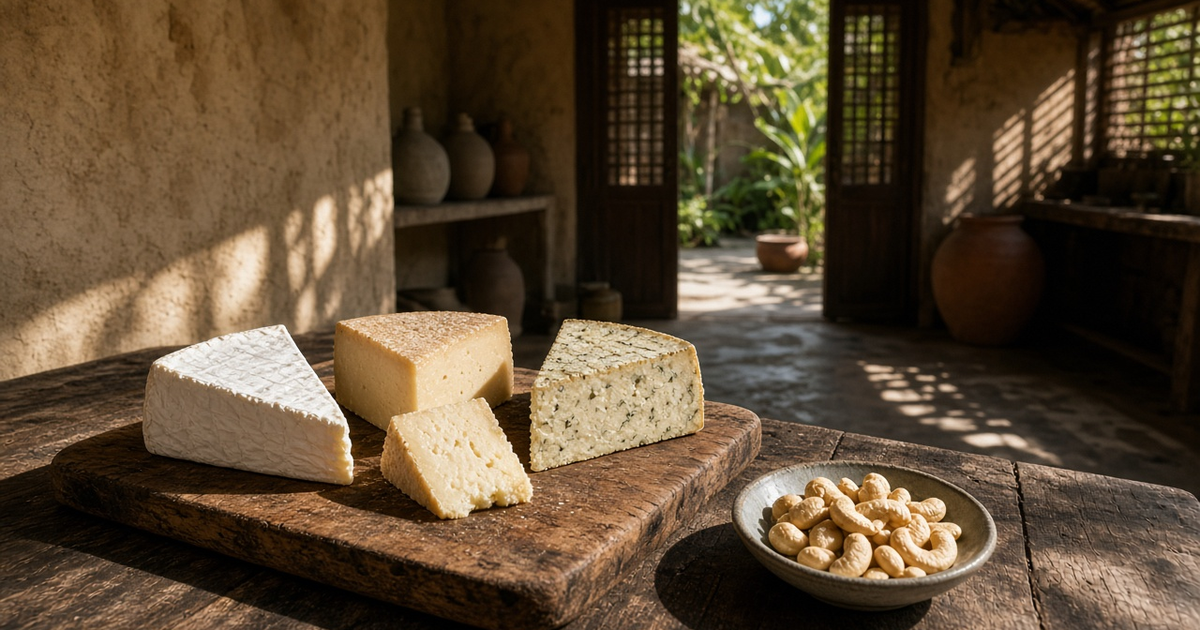
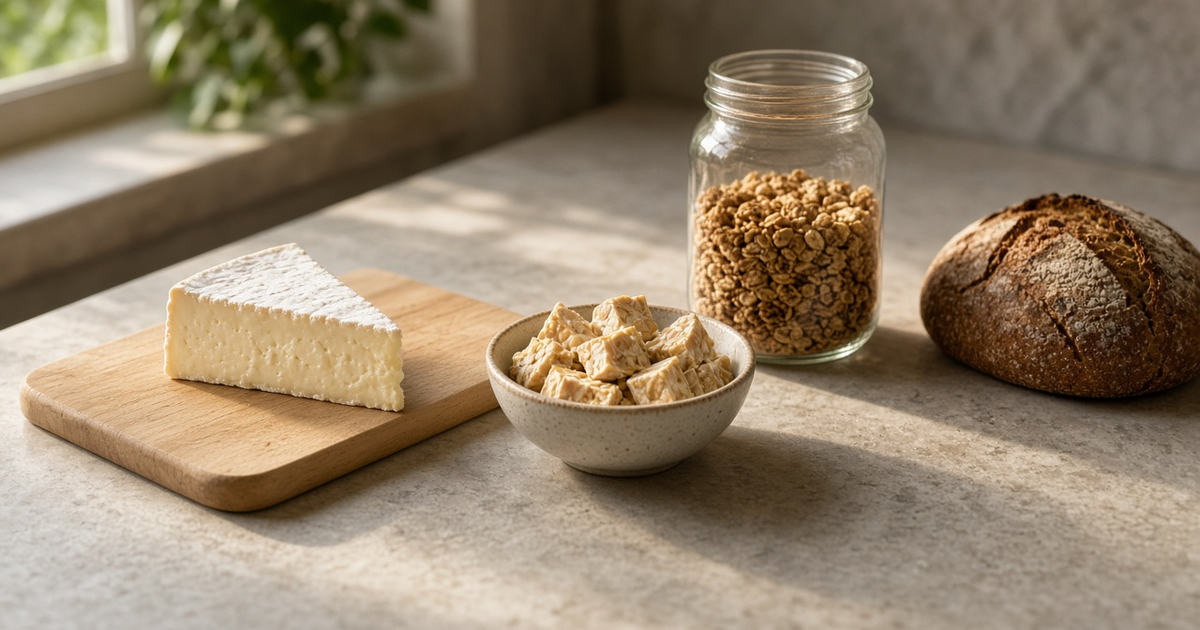
Vegan cheese in Bali is mostly made on the island, and it splits into two products sharing one name: cultured nut wheels from kitchens in Ubud and Gianyar, and starch-and-oil blocks built to stretch and melt.
Both are dairy free and both deserve the word vegan. They behave nothing alike in a pan, and the ingredient list tells you which one you are holding.
Two products, one word on the shelf
The vegan cheese section in a Canggu grocer is not one category. It is three, within arm’s reach.
The first is a cultured nut cheese: cashew or pili nut ground with water, inoculated with cultures, fermented for a day or more, then aged and often rind-formed. This is the Ubud and Gianyar specialty, and the reason Bali has a cheese scene.
The second is a starch-and-oil block: a nut or coconut base thickened with tapioca, set with a gum, and built to shred and melt.
The third is the imported or regional block, often the same formulation as the second but better travelled. Green Rebel makes a cheddar-style block in Java from cashew, potato and rice, and Swees ships plant-based cheese in from Thailand.
| What to check | Cultured wheel (Ubud or Gianyar) | Starch and oil block | Regional or imported block |
|---|---|---|---|
| Base | Cashew, pili nut, sometimes macadamia | Nut or coconut, often blended | Varies, often coconut |
| Fat source | The nut itself | Added coconut oil | Added vegetable fat |
| What sets it | Cultures, time, rind formation | Tapioca or potato starch plus a gum | Starch plus a gum |
| Cultures on the label | Named, sometimes dated | Present, rarely named | Often absent |
| Shelf life | Days to a few weeks, chilled | Weeks to months, sealed | Months, shelf stable until opened |
| In heat | Softens and spreads, does not stretch | Melts and stretches | Melts and stretches |
How to read a vegan cheese label in Indonesia
Indonesian labelling rules help here more than most English packs do. Ingredients run in descending order of percentage, the kaidah urutan persentase jumlah bahan that BPOM enforces, and additives must carry their class name, so a gum appears as pengemulsi or penstabil before the substance.
That rule turns a label into a dosing chart. The position of the starch and the gum, not the word clean on the front, tells you what you bought.
- First ingredient: the base. Cashew, pili nut, coconut or a blend, in that order of percentage.
- Cultures: the marker of a cultured cheese. If kultur or culture is missing, time did not make this cheese.
- Starch: tapioca, potato or corn, listed as pati. High on the list means the melt comes from starch, not the nut.
- Oil: coconut oil is the usual one. Early in the list means a nut-flavoured fat, not a nut cheese.
- Gums: karagenan, xanthan, gelan. They stop separation, and a short-list cheese often has none.
- Salt: fresh cheeses run high, because salt is doing preservation work as well as flavour.
- Shelf life: three weeks versus six months is the clearest signal of which format you bought.
- “Zero preservatives”: worth having, but it is not the same as a short list. Read the rest of the line.
Choose a cultured wheel if:
- You are building a board and want rind and funk to carry it.
- You eat it cold, with bread, fruit or crackers.
- You would rather pay for fermentation time than a melting agent.
Choose a starch-and-oil block if:
- You are making pizza, toasties or anything that has to stretch.
- You need it to survive a week in a Bali fridge.
- You are cooking for a crowd where texture beats nuance.
Why the block melts and the wheel does not
Melting is a formulation problem. Dairy cheese stretches because casein proteins form a network that flows under heat and re-sets as it cools. Remove the casein and you remove the mechanism.
Plant-based cheese rebuilds it from other parts. A 2021 formulation study at the Indonesia International Institute for Life Sciences, working with the Green Rebel team, described the result plainly: the cheese forms from the interaction of proteins, vegetable fats, starch and salt, with starch and the mixing process doing the work casein does in dairy.
That is why the melting blocks lean on tapioca and a gum. Starch gelatinises and gives body, a little hydrocolloid holds the emulsion, and coconut oil supplies the fat. None of it is a trick, and it is also why a sealed block outlasts a living wheel by months.
Where the supply actually comes from
The island’s supply is concentrated in one corridor. TreeNut Cheezery has cultured cashew and pili nut cheese in Ubud since 2019, sources its cashews from the Muntigunung social enterprise in north-east Bali, and lists 27 stockists across Bali and Jakarta: Canggu and Kerobokan first, then Ubud, Uluwatu, Sanur and Seminyak.
Others work smaller: Oh Cheezes Bali makes plant-based cheese to order and supplies hotels and restaurants, Jiva Creations sells cream cheese tubs online, and Aurora Bakery turns out a smoked paprika cheese.
The practical consequence is cold chain. Fresh cultured cheese moves chilled and cannot sit in a warm car, so ordering direct from the kitchen or buying from a shop that keeps it refrigerated is the whole game. Our Bali vegan product list maps these kitchens against the rest of the island’s plant-based production, and where to buy plant milk in Bali covers the shops that stock both.
Gums and oils, the part the front of the pack skips
The two ingredients that decide whether a vegan cheese behaves like cheese are the fat and the hydrocolloid, and both sit low on the list, which is where a shopper stops reading.
Coconut oil is the standard fat because it is solid at room temperature and gives a firm bite straight from the fridge. Carrageenan is the standard gum in the melting formats because it gels strongly and survives heat. If you want to avoid it, the label will say so, and the product will usually be softer and spoonable instead.
Our seed oils guide covers how Indonesian labels separate oil from lecithin, and the same habit applies here. For the vocabulary, what a clean label means defines it without the fog, and the ingredient glossary explains each additive line by line.
This article is general information, not medical advice. If you have a diagnosed condition, are pregnant, or are changing a child’s diet, talk to your doctor or a dietitian first.
Where Worry Nut fits
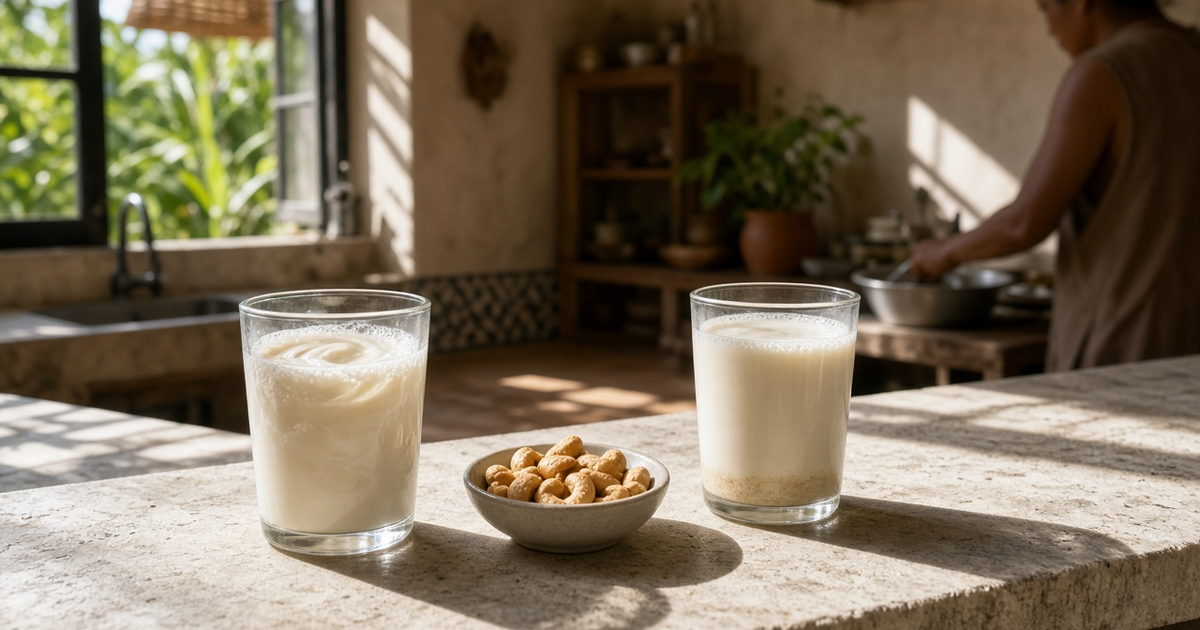
Worry Nut does not make cheese, but every cultured wheel above starts with a nut milk, and a short fresh mylk is the base of a short fresh cheese.
Worry Nut Fresh Cashew Mylk is made in small batches in Ubud, Bali, and carries six ingredients: filtered water, Indonesian cashews, Central Java coconut sugar, Kusamba sea salt, sunflower lecithin and Bali vanilla. No gums, no refined seed oils. The cashew particles are milled fine enough to stay suspended, so it pours thick without a hydrocolloid.
The nutrition panel is lab measured by Prodia OHI, per 200 ml serving.
- Energy: 80 kcal
- Total fat: 6 g
- Sodium: 150 mg
- Carbohydrate: 5 g
- Sugar: 2 g
- Protein: 2 g
Cashew milk is not a nutritional substitute for cow’s milk. Worry Nut carries 2 g of protein per 200 ml serving against roughly 8 g in cow’s milk, and it is not fortified with calcium or vitamin D. If you are relying on milk for those nutrients, plan for them elsewhere.
Cashew is a tree nut, so this bottle is not suitable for anyone with a tree nut allergy.
Delivery is chilled in Bali to Canggu, Ubud and Seminyak, and to the rest of the served area on three bottles or more, with same day arrival in South Bali before the 14:50 WITA cutoff. Jabodetabek runs through a local stockist and is confirmed over WhatsApp.
Bali orders go through the order page, where you pick a day and slot, and one litre is Rp 75.000 against a normal price of Rp 85.000.
FAQ: vegan cheese in Bali
Is there cashew cheese in Bali made locally? Yes. The Ubud and Gianyar corridor is the centre of it, with cultured cashew and pili nut cheese made in small kitchens since 2019 and sold in Canggu, Ubud, Uluwatu, Sanur, Seminyak and Amed.
Why does my vegan cheese not melt? Because it is a cultured nut cheese, not a starch-and-oil block. Cultured wheels soften and spread under heat, but stretching needs starch, a gum and added fat.